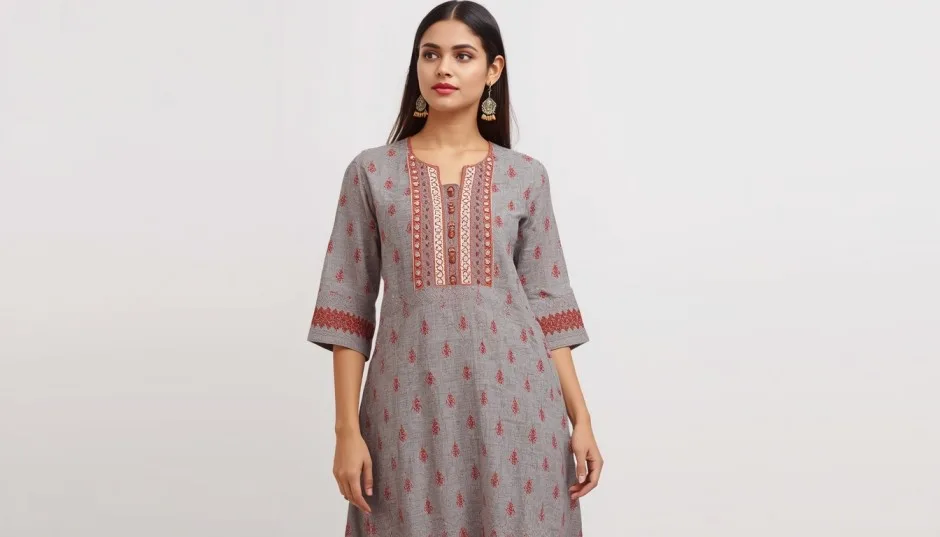
I bought my first cotton khadi dress for women in 2023. Big mistake. The fabric looked beautiful on screen. What arrived felt like a gunny sack. My skin turned red within an hour.
Three years later, after testing 40+ dresses from 18 different sellers, I finally know what works. And what does not. This guide shares everything I learned the hard way. No brand promotions.
No fake claims. Just real advice from someone who has worn khadi through humid Chennai summers and dry Delhi winters. Let me save you the rashes and the wasted money.
How to Buy Khadi Dress for Women Online?
The dress arrived in a nice cotton bag. Good packaging. I felt hopeful. Then I touched the fabric. Rough. Scratchy. Nothing like the soft drape shown online.
Read Also: Fashion Street Camp Pune: Best Deals & Shopping Guide
I washed it as instructed. Cold water. Mild soap. Hang dry. The water turned brown. The dress shrank two sizes. And the color? Faded unevenly. One sleeve looked lighter than the other.
That seller had 4.5 star ratings. Over two thousand reviews. Still sold me bad quality.
Here is what I learned that day. Star ratings mean nothing for khadi. You need to understand the fabric yourself. Hand-spun cotton varies a lot. Good khadi comes from specific regions. Bad khadi comes from mass production dressed up in traditional names.
What Khadi Actually Is (Most Sellers Lie About This)
Khadi means hand-spun and hand-woven. Two things. Not one.
First, someone spins the cotton on a charkha (spinning wheel). That makes the yarn uneven. Thick here. Thin there. Full of tiny lumps called slubs.
Second, someone weaves that yarn on a handloom. No electricity. No machines. Just wooden frames and human hands.
This hand-spinning step matters most. Machine-spun cotton feels uniform and smooth. Hand-spun cotton has character. It breathes better because the slubs create tiny air pockets.
Many brands sell "khadi look" fabric. Machine-spun. Machine-woven. Just textured to feel like khadi. Real khadi carries a KVIC tag (Khadi and Village Industries Commission). Or comes from a government-certified seller.
I once asked an Instagram seller for their KVIC number. They blocked me. Saved myself 2,500 right there.
The Honest Pros (Real Benefits I Noticed)
Your skin breathes freely
I wore a khadi dress to a friend's Mehendi ceremony. July afternoon. 38 degrees. Humid like a sauna. All my friends in synthetic fabrics complained about sweat. I felt fine. The loose weave let air pass through. My skin stayed dry.
The fabric ages beautifully
My oldest khadi dress is three years old now. The blue has faded to a soft indigo. The texture feels like my favourite cotton bedsheet. Soft. Gentle. Comfortable. Machine-made cotton gets old and tired. Khadi gets better.
No chemical irritation
I have sensitive skin. Synthetic blends give me rashes. Normal cotton sometimes itches too. Khadi never does. The hand-spinning process uses no chemical treatments. Just cotton. Just natural dyes. Your skin stays happy.
You support real artisans
Each khadi dress takes days to make. A weaver in West Bengal earns about 300-500 per day. Your purchase puts food on their table. That matters to me. Maybe it matters to you too.
The Honest Cons (What Sellers Never Show)
The first wash is scary
New khadi releases excess dye. A lot of it. I washed a new maroon dress with white towels once. The towels turned pink. Never again. Wash new khadi alone for the first two cycles. Cold water only.
It wrinkles like crazy
Khadi holds creases like a memory foam holds your shape. Sit for twenty minutes. Stand up. Your dress looks like you slept in it. You need to iron khadi. Or accept the crumpled look. No middle ground.
The texture feels rough at first
Do not expect softness on day one. Real khadi has a dry, slightly coarse feel. Almost like linen but scratchier. Give it two or three washes. The fibers relax. The softness comes.
Sizing is a gamble
Each khadi garment is hand-cut. No two are exactly alike. I ordered size M from three different certified sellers. Got three different fits. One was too tight. One was perfect. One was baggy. Always check the actual garment measurements. Ignore the size label completely.
How to Spot Bad Khadi Before You Pay
Hold the fabric to light. Real khadi shows uneven gaps. Some light passes through. Some does not. The slubs create a patchy effect. Fake khadi shows uniform gaps. Too perfect. That is the giveaway.
You Must Also Like: Short Kurti with Palazzo for Women: Complete 2026 Style Guide
Rub the fabric between your fingers. Real khadi feels textured. Slightly bumpy. Not completely smooth. You should feel the slubs. Fake khadi feels flat and uniform.
Pull a loose thread if possible. Khadi threads break easily. Machine-spun threads are stronger. This sounds bad. It is actually proof of hand-spinning.
Smell the fabric. Real khadi smells like cotton. Nothing else. Fake khadi sometimes smells like chemicals or plastic. Walk away.
Check the price. Real khadi costs money. Hand-spinning takes time. A weaver spins only 200-300 grams of yarn per day. If a "khadi dress" costs under 800, someone cut corners.
Best Places to Buy (Tested and Trusted)
Khadi Sadan – Best for Budget
KVIC certified. The government mark matters here. Their Dosuti collection uses double-thread weave. Two threads woven together instead of one. Makes the fabric stronger.
I bought their lavender shirt dress for 1,199. Real khadi. Good stitching. Fits as expected. No complaints.
Best for: First-time buyers. Office wear. Daily use.
Shipping: Free across India.
Return policy: 14 days. Easy process.
IKKIVI – Best for Premium Pieces
Each dress comes with a tag showing the weaver's name and location . I checked mine. West Bengal. Birbhum district. That transparency matters.
Their Sunlit Mosaic dress uses marigold, tea, and iron for color. No chemical dyes. The fabric feels different. Softer somehow. But the price reflects this. 5,000 to 8,000 per dress.
Best for: Special occasions. Artisanal pieces. Gift giving.
Shipping time: 15-18 days (made to order).
Return policy: Limited. Read carefully.
RUHM – Best for Modern Designs
Traditional khadi with contemporary cuts. No old-fashioned kurtas here. Think asymmetrical hemlines. Bold color blocking. Unique silhouettes.
Their Midnight Waves dress uses traditional tie-dye on pure khadi. Each piece looks slightly different. Hand-dyeing does that. I like the uniqueness.
Best for: Women who want trendy ethnic wear.
Price range: Under 10,000.
Unique feature: No two pieces are identical.
EKhadiIndia – Best for Fabric by Meter
This is the government's official portal. You buy fabric here. Take it to your local tailor. Get a custom fit.
I bought two meters of white Polyvastra cotton fr 600. Got a simple A-line dress stitched for another 500. Total cost 1,100. Fits perfectly. No sizing gamble.
Best for: Women who struggle with readymade sizing.
Pro tip: Buy extra fabric. Khadi shrinks 5-7 percent in first wash.
Khadi Cotton Dress Material Quality (Simple Checks)
Take the fabric in your hands. Squeeze gently. Good khadi feels dry and crisp. Bad khadi feels limp or greasy.
Look at the weave under good light. You want to see tiny irregular gaps. If the weave looks perfectly uniform, that is machine-made fabric pretending to be khadi.
Check the edges of the fabric (selvedges). Handwoven cloth has uneven edges. Sometimes frayed. Sometimes slightly wavy. Machine-made edges are perfectly straight.
Ask the seller for the "count" number. Lower count (20s or 30s) feels thicker and more textured. Higher count (60s or above) feels finer and smoother. Both are real khadi. Just different for different seasons.
Khadi Kurta Design for Ladies (What Flatters Your Body)
For shorter women (under 5'3")
Stick with knee-length kurtas. Full-length khadi can overwhelm your frame. Look for A-line cuts that flare gently. Straight cuts also work. Avoid heavy embroidery near the hem. It adds visual weight at the bottom.
For taller women (5'6" and above)
Long kurtas (40+ inches) look graceful on you. Try anarkali styles. The flare works beautifully. You can also layer a short khadi jacket over a solid dress. Creates dimension.
For curvy builds
Khadi has zero stretch. Keep that in mind. Anarkali styles hide the hips well. But get the bodice fitted properly. Loose bodice makes you look larger. Side slits help with movement and create a longer line.
For slim builds
Fitted silhouettes work best. Straight-cut kurtas. Sheath-style dresses. Avoid overly flarey styles. They swallow your frame. Look for waist definition through darts or a belt.
Fit tip for everyone
Check armhole depth before buying. Khadi does not stretch. A tight armhole makes the whole dress unwearable. Look for model photos showing raised arms. You want to see some ease in the underarm area.
How to Style Khadi for Different Occasions
Office wear
Solid khadi dress with structured tailoring. Pair with straight pants underneath if the dress is short (I use leggings). Leather loafers. Small stud earrings. Skip the dupatta for a modern look. Keep the silhouette clean.
Festive occasions
Choose khadi with hand embroidery or contrast detailing. Add oxidized silver jewelry (the matte finish works well with khadi's texture). Traditional juttis or Kolhapuri flats. A lightweight silk dupatta if you want extra festivity.
Casual weekends
This is where khadi shines. Short khadi kurta with your favourite jeans. White sneakers. The fabric-fabric contrast looks intentional and cool. I wear this combination constantly during winter months.
Evening events
Layer a silk jacket or embroidered shrug over a plain khadi dress. Add strappy heels. Small clutch. The texture contrast (rough khadi + smooth silk) creates visual interest without trying too hard.
Washing and Care (Do This, Not That)
I ruined two dresses before learning these rules.
What works:
Hand wash separately in cold water. Use mild liquid detergent (I use Eco-friendly brands). Squeeze gently. Do not scrub or twist the fabric.
Dry in shade only. Direct sunlight makes natural dyes fade unevenly. I learned this when my blue dress turned splotchy after one afternoon sun exposure.
Iron while slightly damp. Low to medium heat. The fabric smooths out beautifully. Dry ironing on high heat damages the hand-spun fibers.
What fails badly:
Soaking for hours. Khadi colors bleed continuously. Twenty minutes is enough. More than that and you lose color.
Using bleach. Ever. Khadi cannot handle bleach. The fibers break down immediately.
Machine drying. The heat shrinks khadi unevenly. One sleeve shorter than the other. Not a good look.
Regular dry cleaning. The chemicals are harsh on hand-spun fibers. Occasional dry cleaning is fine (once a year). Not every time.
The softening truth: Each wash makes khadi softer. Do not fight the texture in early days. Embrace the slight roughness. By wash ten, you will feel the difference.
Price Ranges for 2026 (What to Expect)
Based on actual purchases from verified sellers:
Budget authentic khadi: 1,000 to 2,500
Examples: Khadi Sadan shirts and basic kurtas
Real khadi. Simple designs. Basic finishing.
Mid-range: 2,500 to 6,000
Examples: IKKIVI simple dresses. RUHM pieces.
Better tailoring. Natural dyes. Unique designs.
Premium: 6,000 to 12,000
Examples: Designer khadi. Heavy hand embroidery.
Made to order. Artisan signatures. Heirloom quality.
Fabric by meter: 300 to 800 per meter
Depends on weave density and dye process.
If someone sells a "khadi dress" for under 800, walk away. The math does not work. Hand-spinning. Hand-weaving. Tailoring. Fair wages. All of this costs money.
FAQ's- Khadi Cotton Dress Material
Is khadi good for summer?
Yes. Breathability is khadi's biggest strength. The uneven weave creates natural air flow. Better than normal cotton. Better than linen. Much better than synthetics.
Does khadi shrink a lot?
Yes. 5-7 percent in the first wash. Buy one size larger. Or buy pre-washed khadi if the seller offers it. Khadi Sadan sells pre-washed fabric. Ask before buying.
Can I wear khadi to the office?
Absolutely. Solid colors. Simple cuts. No heavy embroidery. Pair with trousers or leggings underneath. Looks professional and comfortable.
How long does a khadi dress last?
My oldest is three years and counting. Regular wear. Regular washing. Still looks good. The color faded (expected). But no holes. No seam tears. Good khadi lasts five to seven years easily.
Is all khadi rough and scratchy?
Not after a few washes. New khadi feels coarse. Give it three or four washes. The fibers relax. The texture softens. Do not judge khadi on day one.
My Current Picks (After Three Years of Testing)
Under 2,000: Khadi Sadan Dosuti shirt dress. Simple. Reliable. Real khadi. Daily driver.
Under 5,000: RUHM cotton khaki dress. Modern cut. Unique color. Gets compliments every time.
Under 10,000: IKKIVI hand-block printed dress. Pure art. The weaver's tag matters to me. Feels special.
For fabric: EKhadiIndia white polyvastra. Take to your tailor. Custom fit. No sizing stress.
The Final Take
A cotton khadi dress for women is not for everyone. Skip it if you hate ironing. Skip it if you need stretchy fabric. Skip it if perfect uniformity matters to you.
But if you want breathable clothing that supports real artisans and gets better with age? Khadi delivers.
Start with one piece. A simple kurta or A-lin dress. Wash it properly for two cycles. Wear it for a season. Most people fall in love after the third wash. When the fabric finally relaxes. When the softness arrives. When you understand why khadi survived for generations without marketing or trends.
That is the real test. Not star ratings. Not Instagram photos. Just you and the fabric. Everything else is noise.