I. Introduction: The Cultural Pivot
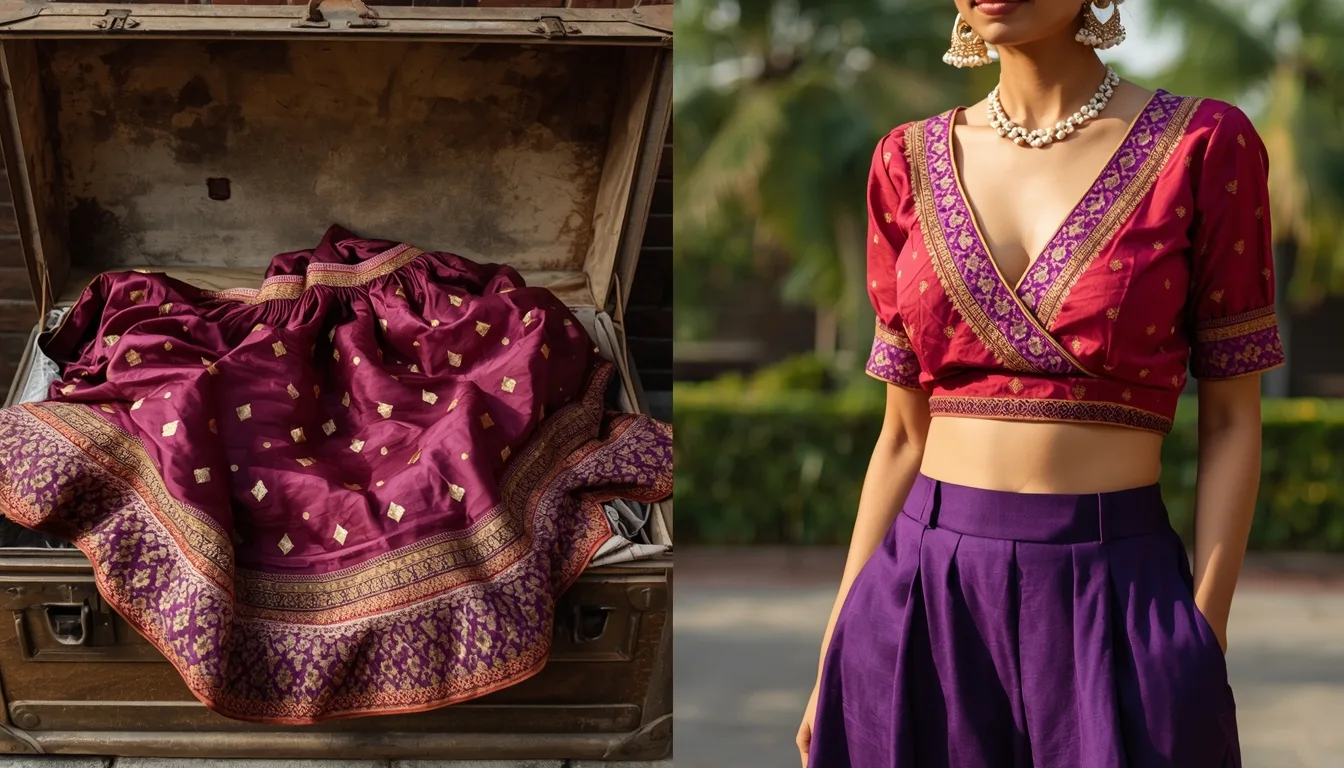
Weddings in India used to mean one big outfit you wear once and then pack away. That heavy Banarasi lehenga, full of zari work and handloom heritage, sits in a trunk for years after the big day. But things are changing in 2026.
People want clothes they can wear more than once. They want pieces that fit daily life, not just events. Upcycling Banarasi lehengas lets you turn that old heirloom into fresh separates like blazers, crop tops, or skirts. It's about keeping the craft alive while making it work for today.
The problem is real. Those lehengas are bulky. The skirt part alone can have 18 kalis or panels that make it hard to move in offices or casual outings. Moms and aunts pass them down, but no one wears them now.
Dust gathers, zari tarnishes if not stored right. Upcycling fixes this. You deconstruct the lehenga into parts that mix with jeans or palazzos. It saves money, cuts waste, and honors Varanasi's weavers from clusters like Mubarakpur.
This guide walks you through it step by step. From checking if your silk is real to picking modern silhouettes for heavy silk fabrics. You'll learn zari preservation tricks and why slow fashion India 2026 makes this a smart move. If you love short kurti with palazzo women 2026, you'll see how Banarasi fits right in.
II. Authentic Banarasi: The "Cut-Test"
How to Tell if My Banarasi Silk Is Authentic Before Cutting It?
Purple Banarasi silk saree
Hold your lehenga up to light. Real Banarasi silk from Varanasi shows a slight shine but not too much. The threads feel smooth, not rough like machine-made stuff. Check the GI tag first – that's the official mark from the government saying it came from the right place.
Next, do the reverse side float test. Flip the fabric over. In authentic pieces, the zari threads float loose on the back, not cut short. That's from the Kadhwa technique where weavers make motifs without loose ends. Plastic zari on fakes sticks flat and looks cheap. Tug gently – real zari is silver or gold alloy, bends but doesn't snap. Fakes crack or peel.
Burn a tiny corner if you're sure. Real silk smells like burnt hair and turns to ash. Synthetics melt into plastic beads. But don't do this on the whole piece! Feel the weight too.
A good lehenga with 18 kalis weighs heavy because of pure mulberry silk. Clusters like Varanasi and Mubarakpur use 5600 threads per sari width, same for lehengas. If it feels light, skip it.
This test builds trust. You're not ruining grandma's wedding silk – you're saving real handloom heritage. Stores in Delhi sell fakes for quick cash, but upcycling needs the good stuff. Check the border too. Real zari work has clean lines, no fraying.
Now, store it right before cutting. Fold with zari inside, wrap in mulmul cloth, keep in dark cool spot. No hanging – it stretches the threads. This keeps the Banarasi handloom heritage intact.
This close look at zari work shows the fine gold threads that make Banarasi special. See how they weave tight without gaps.
III. The Architecture of Deconstruction
Traditional Garment Deconstruction: Planning the Transformation
A Banarasi lehenga has three main parts: the kalis, the border, and the waistband. Kalis are the flared panels – usually 16 to 18 in a full skirt. Each kali is about 6-8 inches wide, sewn together for volume.
The border runs at the bottom, 4-6 inches wide, packed with zari. Waistband is stiff fabric at the top, often with hooks.

Lay it flat on a big table. Mark the seams with chalk. Use sharp fabric scissors – dull ones tear silk. Cut along the kali seams first. Work slow to save every inch. For zari preservation, never pull threads. If a motif snags, pin it down and hand-stitch around before cutting.
Bias cutting helps with heavy silk. That's cutting on the diagonal for stretch. Grainline is straight along the weave – stick to it for borders to avoid puckering. Tailors in Delhi charge 2000-5000 rupees for this, depending on damage.
Plan the cuts around motifs. Say your border has floral Kadhwa patterns – save it whole for a crop top hem. Kalis make great blazer panels since they're straight-ish. Waistband? Perfect for belts or jacket collars.
Tools you need: pins, chalk, scissors, iron (low heat), thread matching the silk. Steam first to relax folds. If zari oxidized, wipe with soft cloth – no chemicals.
This step is key for lehenga to Indo-western fusion. No waste means full Banarasi silk coordinates.
For daily wear ideas like anarkali salwar kameez daily wear simple guide, use extra fabric for dupattas.
IV. Three Modern Silhouettes for 2026
Silk trends 2026 love fluid shapes that move easy. Heavy silk works if you cut smart. Indo-western is big – crop tops, blazers, midis.
The Power Separate: Turning the Kalari (Panels) Into a Structured Banarasi Silk Blazer
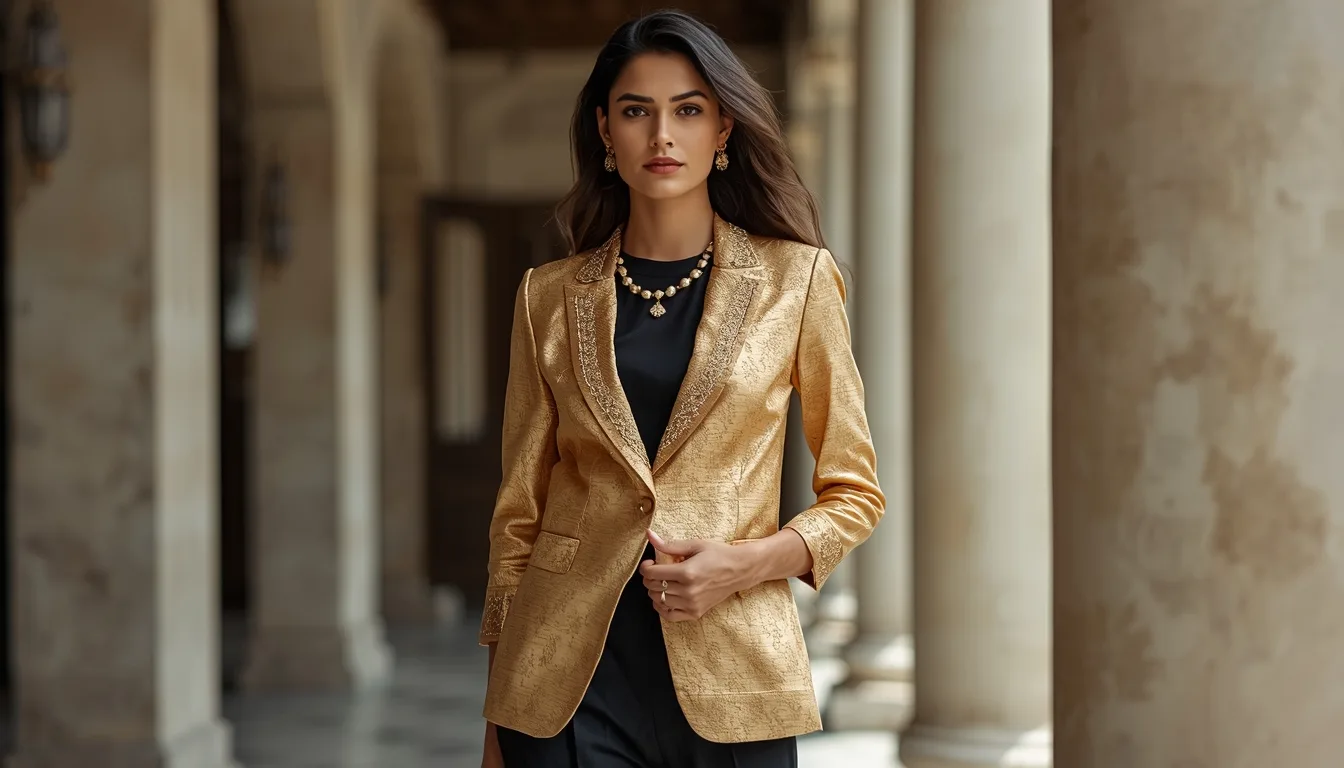
Take 4-6 kalis. Sew into front and back panels. Add lining from cotton for structure. Use waistband for lapels. Buttons from old jewelry. Pair with pants for office. This blazer shines at work or parties.
In 2026, golden jacquard blazers are hot. Zari adds edge without trying hard.
Check this golden Banarasi brocade blazer with pants. It shows how panels turn structured and modern.
Tailoring tip: stitch zari edges with invisible thread. Cost: 3000 rupees at local tailor.
The Street-Fusion: Banarasi Crop Tops Paired With High-Waisted Trousers
Border makes the best crop top. Cut to 14 inches long, add straps from scraps. Hem with horsehair for flare. Pair with high-waist jeans or palazzos. Perfect for brunches or markets.
Banarasi crop tops mix with latest Punjabi suit designs for fusion looks. Trends say ivory jacquard with tassels rules.
This ivory crop top on a model pairs great with skirts. Imagine it with trousers for street style.
Easy DIY: machine stitch sides, hand-finish zari.
The Cocktail Hybrid: Converting the Voluminous Skirt Into a Midi-Length “New Look” Silhouette
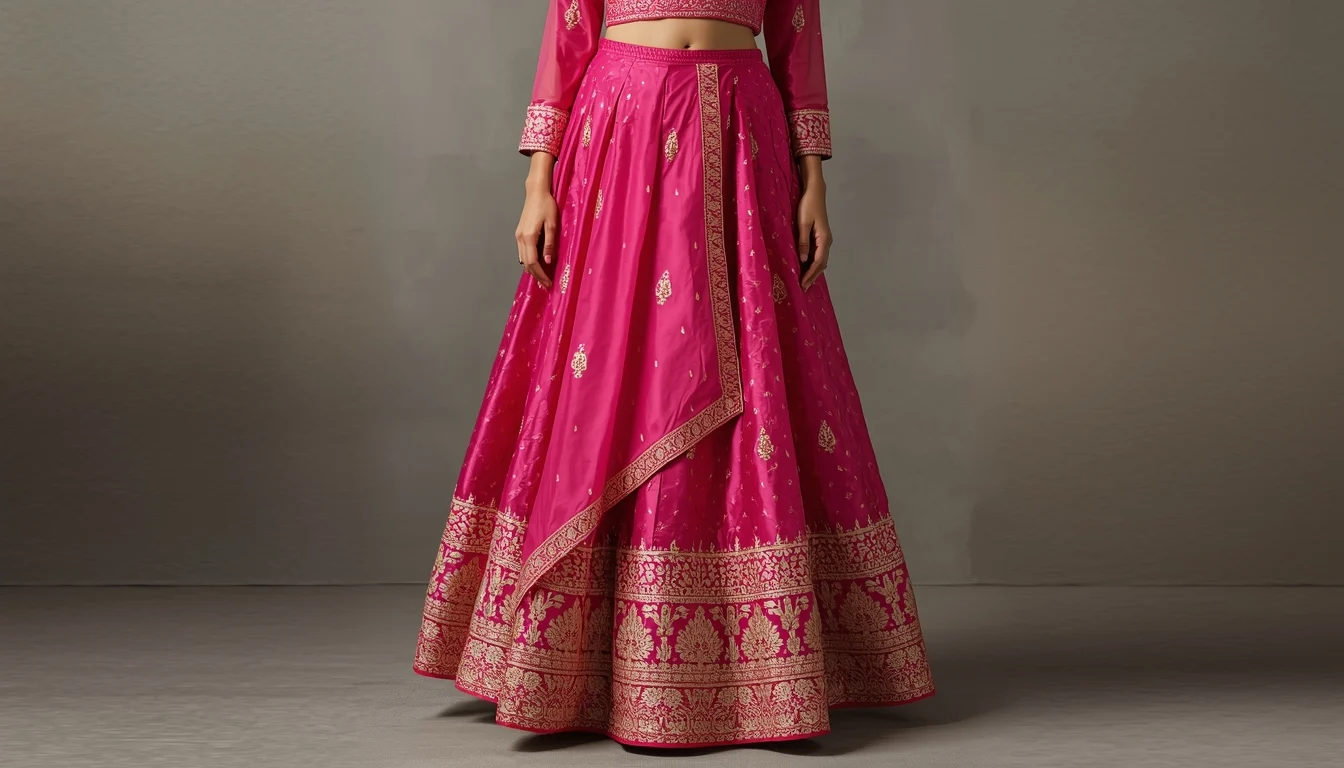
Use remaining kalis for a midi skirt. Gather 10 kalis into A-line. Midi hits knee – fresh for dinners. Add side slit for walk. Full skirt volume? Pleat it down.
2026 loves flared Banarasi skirts in pink zari.
Fuschia pink zari circular skirt looks cocktail-ready. Voluminous but modern.
Preserve zari by understitching hems.
V. The Sustainability Audit
Is it worth upcycling an old Banarasi lehenga or buying new?
Upcycling wins on cost, earth impact, and value. New lehenga costs 30,000-5 lakhs. Upcycle: 5,000-15,000 rupees.
| Factor | Buying New | Upcycling |
|---|---|---|
| Cost | 30,000+ | 5,000-15,000 |
| Water Use | 2,500 liters per silk piece | Almost none |
| Carbon Footprint | Silk 7.63kg CO2e, Polyester 6.4kg | Low – reuse cuts it 80% |
| Cultural Value | New trend | Keeps family heritage |
| Wear Times | 1-5 | 50+ |
Slow fashion India 2026 pushes this. Less waste, more stories.
Varanasi weavers need this support.
Weavers in Varanasi on handlooms keep the craft going. Upcycling buys from them indirectly.
Wrapping Up the Renaissance
Upcycling Banarasi lehengas breathes new life into old silks. You get Banarasi silk coordinates for daily wear. Traditional garment deconstruction is simple if planned. Cost of upcycling heavy ethnic wear beats new buys. DIY Banarasi makeover saves the planet.
Try these modern silhouettes for traditional fabrics. Your trunk heirlooms deserve it.